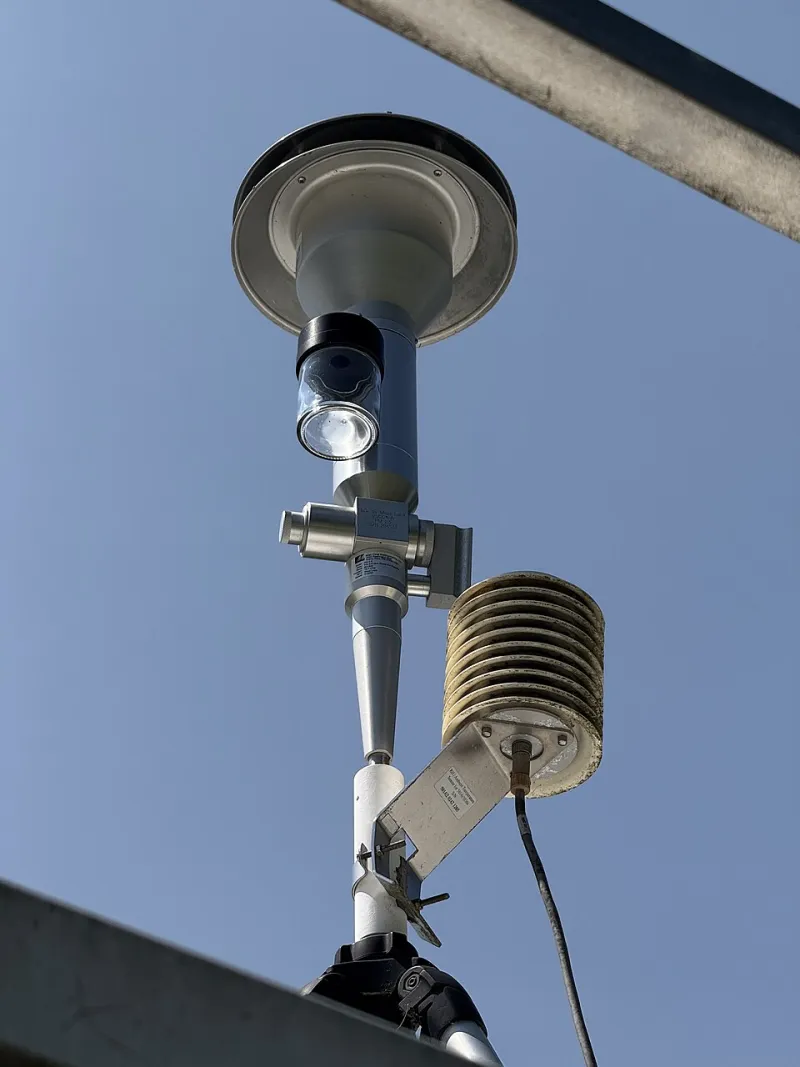
The Drift We Ignore: Environmental Sensing's Quiet Maintenance Crisis
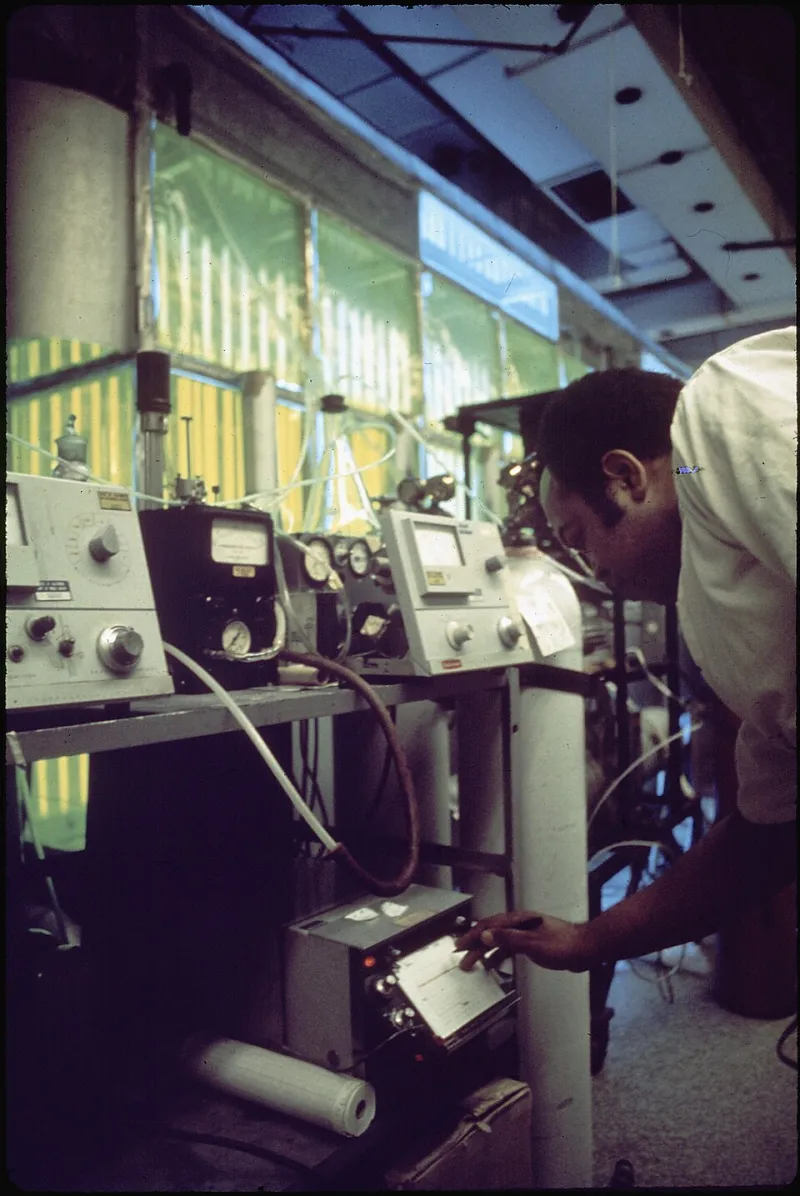
Photo: Gene Daniels, Public domain, via Wikimedia Commons
Here is an uncomfortable truth about the environmental monitoring industry: the instrument that gets purchased is rarely the instrument that keeps performing. Every sensor deployed in the field begins drifting from its factory calibration the moment it encounters the real world — dust, biofouling, temperature cycling, electrochemical aging. Yet the industry's commercial machinery remains built around the sale, not the decade of custody that follows.
The Gap Between Spec Sheet and Field Reality
Manufacturer specifications are typically established under controlled conditions: clean air, stable temperatures, freshly calibrated references. A PM2.5 monitor promising ±2 µg/m³ accuracy may perform acceptably in a lab chamber and substantially worse after a summer of wildfire smoke has coated its optics. Dissolved oxygen membranes foul in weeks in nutrient-rich Southern reservoirs. Electrochemical cells exhaust on schedule whether they have sensed anything or not.
Buyers, meanwhile, are evaluated on capital expenditure, not data quality. The procurement incentive favors the lowest upfront cost with the most impressive brochure — a combination that virtually guarantees disappointment in year two.
When Networks Quietly Fail
The consequences are not hypothetical. Analyses of low-cost air sensor networks across the United States have repeatedly documented inter-unit variability and drift significant enough to complicate trend interpretation. During major smoke events — the Canadian wildfire plumes that blanketed the Midwest and Northeast in 2023 being the most visible example — the disparity between reference-grade monitors and consumer devices became a national conversation.
Water monitoring tells a parallel story. State agencies conducting quality assurance audits of continuous monitors have found meaningful fractions of deployed sondes reporting data outside acceptance criteria — often due to fouling or expired calibrations between service visits. Data exists. Its fitness for purpose does not.
The pattern is consistent: hardware failure is rare; data degradation is routine. And unlike hardware failure, degradation is silent. A sensor reporting plausible numbers is more dangerous than one reporting nothing at all.
Toward a Data Lifecycle Mindset
The fix requires reframing what is actually being purchased. Facilities and agencies do not buy sensors; they buy a stream of defensible measurements over time. That stream has a lifecycle — deployment, drift, correction, recalibration, eventual retirement — and every stage needs budget and accountability.
For buyers, three practices matter most. Establish a documented calibration schedule with traceable references, and treat it as an operating cost, not an optional extra. Log metadata — cleaning events, replacements, anomalous conditions — alongside the data itself, so future users can assess fitness. And where possible, co-locate periodic reference measurements to quantify drift empirically rather than assuming it away.
For manufacturers, the opportunity is equally clear. The industry should stop competing on laboratory-grade specifications that field conditions will erase, and start competing on drift characterization, serviceability, and embedded diagnostics. A sensor that reports its own fouling status is worth more than one with a marginally better number on a clean-air datasheet. Subscription-based calibration services, remote diagnostics, and standardized data-quality flags would serve buyers better than another decimal point of theoretical accuracy.
What Is at Stake
Environmental data increasingly drives consequential decisions: air quality advisories affecting millions, water permits with legal force, climate trend analyses spanning decades. Data collected without lifecycle discipline is not merely imprecise — it can be confidently wrong, and confidently wrong data propagates through models, reports, and policy.
The environmental sensing sector has succeeded brilliantly at making measurement cheaper and more widespread. The next chapter of that success depends on an unglamorous commitment: treating calibration, maintenance, and data integrity as core product features rather than afterthoughts. The planet, one data point at a time, deserves nothing less.