Night Shift for the Nitrate Network: Inside the Rise of the Remote Instrument Technician
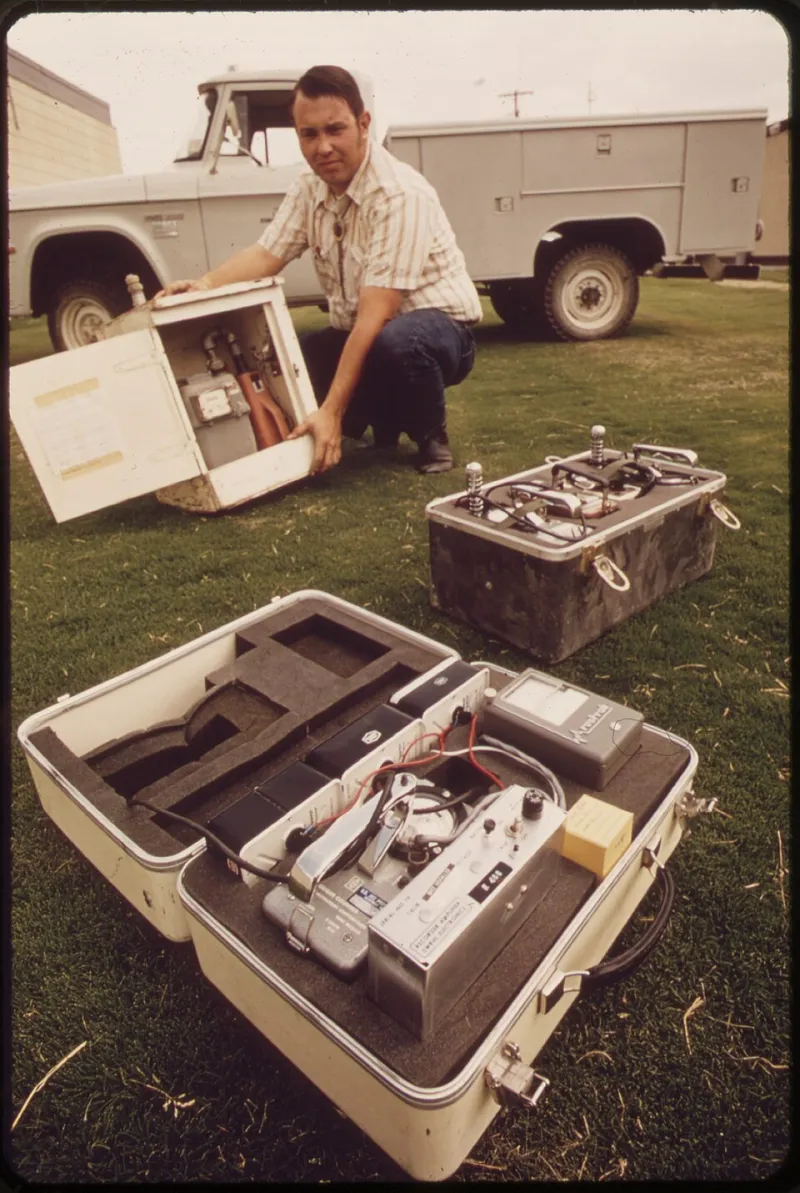
Photo: Charles O'Rear, Public domain, via Wikimedia Commons
At 2:47 a.m. on a Tuesday in March, a turbidity sensor on the Willamette River flagged a spike that turned out to be nothing more than a logjam shifting in the current. Ninety miles away, a technician named Dana Ruiz saw the alert on her phone, cross-checked two upstream gauges, and closed the ticket before her coffee finished brewing. No truck was dispatched. No site visit was scheduled. The network healed itself — or, more precisely, a human did the healing from a distance.
This is the emerging rhythm of environmental monitoring in the United States: instruments that never sleep, watched over by people who increasingly do their watching at odd hours, from places that are not laboratories.
The Job That Cloud Connectivity Created
A decade ago, a fouled sensor stayed fouled until someone drove to it. Today, telemetry-first design means most problems announce themselves within minutes — a battery sagging below threshold, a nitrate probe drifting past its control limits, a data logger that stops handshaking with the server. The result is a new occupational category that the Bureau of Labor Statistics does not yet track under its own name: the remote instrument technician.
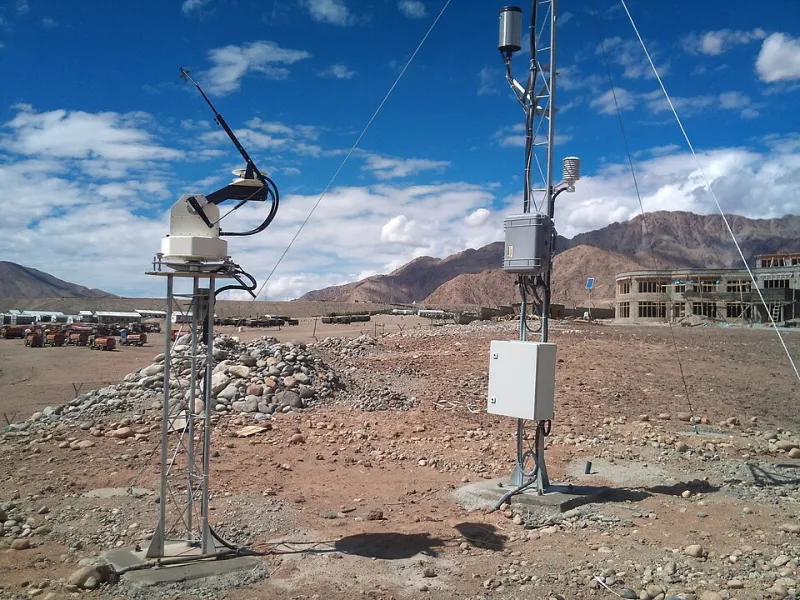
These are not the traditional field engineers who climb met towers and wade into streams, though many started that way. Their toolkit is a VPN, a dashboard, and an intimate knowledge of how a particular fleet of sensors behaves when it lies. Their workplace is wherever a laptop opens.
The shift mirrors what happened in IT a generation ago, when server rooms gave way to network operations centers. Environmental sensing is now populated by its own version of the NOC — except the servers are bolted to bridge abutments and the crashes involve biofouling rather than blue screens.
Why the Overnight Hours Matter
There is a reason the alerts cluster after dark. Ambient temperatures drop, condensation forms inside enclosures, batteries hit their lowest state of charge, and in cold-climate states like Minnesota and Wisconsin, heaters and desiccants work hardest exactly when nobody is around to notice a failure. Algal dynamics in reservoirs, dissolved-oxygen swings in slow-moving southern rivers, and stormwater surges in flash-flood-prone arroyos all tend to misbehave on nature's schedule, not the 9-to-5 one.
Networks that once batched anomalies for morning review now face a choice: staff the night, or accept that the data record will have gaps. Utilities, water districts, and research consortia are answering differently. Some have formalized on-call rotations with response-time targets measured in minutes. Others contract with third-party monitoring-as-a-service vendors whose entire pitch is that someone is always awake.
The economics are still settling. A fully staffed 24/7 operations desk is expensive, and for many small monitoring programs it is out of reach. What is emerging instead is a hybrid model: automated triage handles the routine, humans handle the ambiguous, and field crews handle only what genuinely requires hands.
What Reliability Looks Like When Nobody Drives Out
The uncomfortable question beneath all of this is whether remote response is actually as good as boots on site. The honest answer is: sometimes better, sometimes worse.
Better, because a technician who can compare an anomalous reading against three neighboring stations in ninety seconds catches things a solo field visit never would. Spatial context is a superpower that dashboards grant and windshield time denies. False alarms get filtered cheaply; real drift gets caught early.
Worse, because some failures are physical and remote work is a mirage. A clogged intake line cannot be unclogged by SSH. A lightning-struck antenna cannot be restarted from a phone. Networks that quietly substitute remote triage for scheduled site maintenance are borrowing against future data quality, and the interest comes due as unexplained drift that no one can date.
The mature operations treat remote staffing as a layer, not a replacement. Ruiz, the Willamette technician, describes her role as sorting the night's alerts into three piles: fix from here, schedule for the van, and watch to see if it resolves itself. The skill, she says, is knowing how long to let a sensor be wrong before intervening.
A Profession Still Writing Its Own Job Description
For now, most people in these roles arrived sideways — former lab analysts, ex-utility operators, field engineers who moved indoors. Formal training programs are scarce; a handful of community colleges and extension programs have begun offering coursework in telemetry, SCADA basics, and data QA, but the profession's knowledge still lives mostly in institutional memory.
That memory matters. Knowing that a specific conductivity sensor always reads low after a hard freeze, or that a certain river gauge floods its antenna every spring, is not something a dashboard can encode. As monitoring networks expand — driven by state air-quality programs, agricultural runoff rules, and climate adaptation funding — the bottleneck will not be sensors. It will be people who understand them.
The 4 a.m. calibration call is not glamorous. But the quiet reliability of America's environmental data — the numbers that underwrite water permits, air quality alerts, and drought declarations — increasingly depends on it.