The Price of Precision: A Field Audit of Budget Versus Research-Grade Sensors
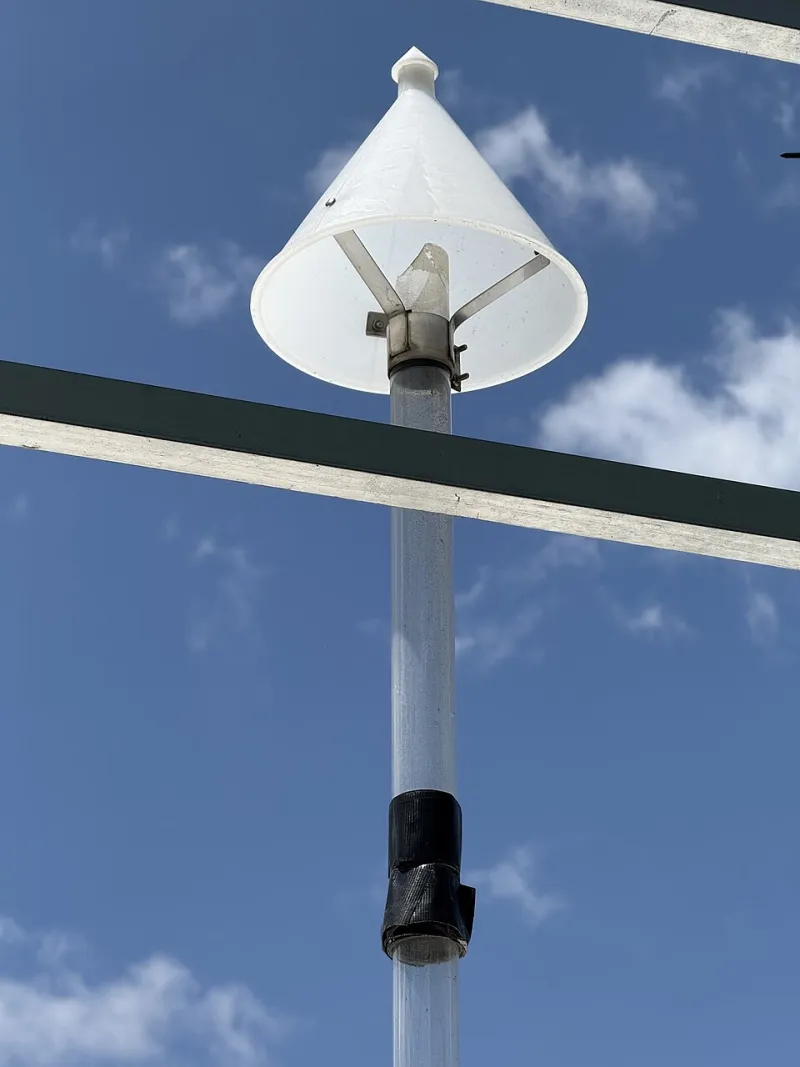
Photo: Famartin, CC BY-SA 4.0, via Wikimedia Commons
Every procurement meeting eventually arrives at the same uncomfortable moment: someone slides a quote across the table, and someone else asks why the cheap option won't do. In environmental sensing, that question deserves a better answer than it usually gets.
Over the past several months, we examined paired deployments—budget sensors and research-grade instruments colocated at the same sites, logging the same conditions. The goal was not to crown a winner but to map where the price gap actually buys something, and where it mostly buys anxiety relief.
Temperature: The Boring Sensor That Mostly Works
Modern digital temperature sensors, even inexpensive ones, have become remarkably competent. In our comparison, a sub-$100 digital probe tracked a research-grade RTD within roughly 0.3°C over a full seasonal cycle in a temperate outdoor enclosure. That margin matters little for facility management, HVAC verification, or agricultural degree-day calculations.
The divergence appeared at the extremes. During a mid-summer heat event in the Southwest, the budget unit's enclosure warmed well above ambient, pushing its readings more than 2°C off reference. Radiation shielding, not the sensor element, was the difference. Research deployments pay for enclosure engineering as much as for electronics.
Humidity: Where Drift Starts Earning Its Invoice
Relative humidity is where the gap widens. Capacitive RH elements in low-cost sensors are often rated for 2–3% accuracy out of the box—but that rating is a snapshot, not a promise. Within eight to twelve months of continuous outdoor exposure, several budget units in our comparison drifted by 5% or more, with no onboard mechanism to flag it.
Research-grade instruments, particularly those designed for regular recalibration, held within 1–2% over the same window. For applications where humidity feeds into derived metrics—dew point, vapor pressure deficit, mold risk models—unexamined drift compounds quietly. The cheap sensor doesn't fail loudly; it fails persuasively, producing a smooth, confident, wrong dataset.
Air Quality: The Genuine Chasm
If temperature showed a narrow gap and humidity a widening one, particulate matter sensing is a canyon. Low-cost optical particle counters, even the better ones, struggle to distinguish particle sizes, depend heavily on assumptions about aerosol composition, and degrade as dust accumulates on internal laser components.
In colocated comparisons against reference-grade federal equivalent instruments, budget PM2.5 sensors routinely deviated by 30–50% during wildfire smoke episodes—precisely the events people buy them to track. They remain useful for relative trends: a spike is a spike. But treating their outputs as regulatory-grade concentrations is a category error that keeps getting made.
A Decision Framework, Minus the Sales Pitch
The pattern across our comparisons suggests four questions worth answering before signing either purchase order:
- What decision does the data inform? Compliance reporting, published research, and health advisories demand defensible accuracy. Comfort dashboards do not.
- How long is the deployment? Drift is a function of time. A budget sensor for a three-month study is a different proposition than the same sensor left in the field for five years.
- Who checks the checker? Any network without a calibration and audit plan will converge on garbage regardless of initial hardware cost.
- What does a bad number cost? In some contexts, a missed exceedance is an embarrassment. In others, it's a lawsuit.
Run those four answers and the price gap usually resolves itself. Facilities tracking indoor conditions for occupant comfort can absolutely live on $200 hardware. Researchers publishing findings, operators near regulatory thresholds, and anyone whose data will be scrutinized after the fact should budget accordingly—then budget again for maintenance, because the instrument is the smallest line item in a credible monitoring program.
The Honest Conclusion
Cheap sensors fail expensively, and expensive sensors fail expensively too—the difference is that one failure mode is documented, and the other is discovered. The $20,000 instrument doesn't justify itself through superiority in fair weather. It justifies itself in the conditions you can't predict, on the timeline you can't control, in front of the audience you didn't expect.
Buy for the worst day your data will face, not the average one.