Where the Numbers Go to Die: Auditing the Middle Layer Before You Buy the Sensors

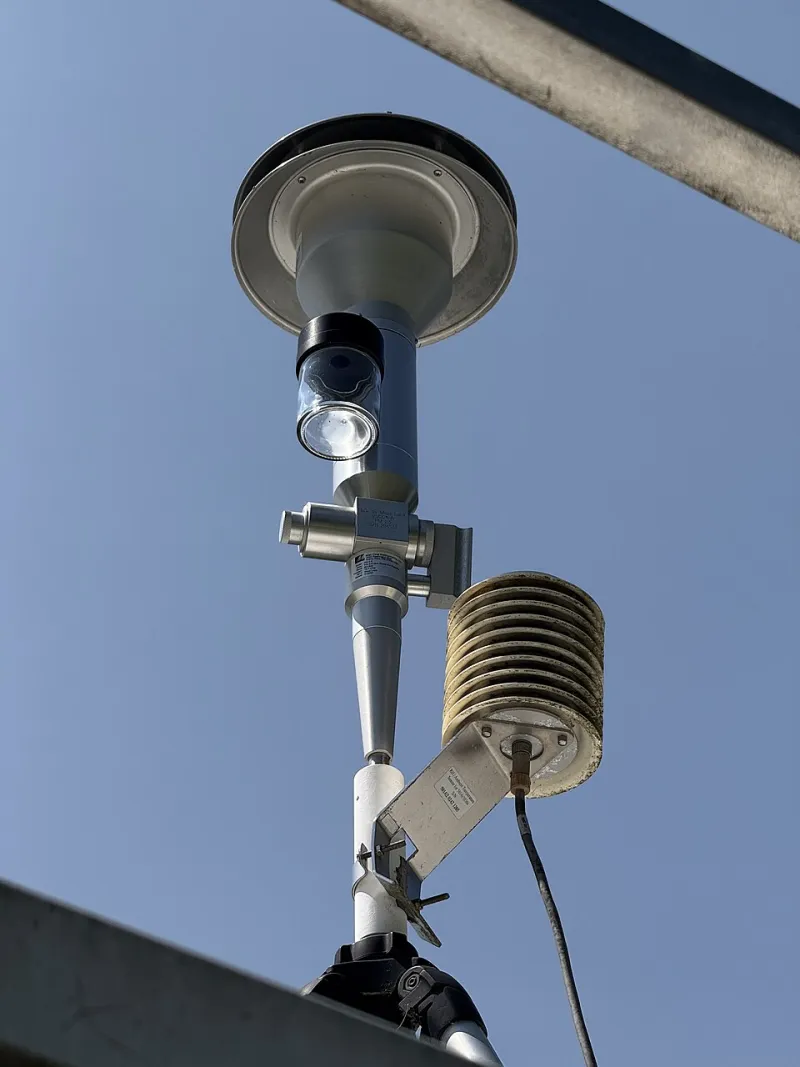
Photo: Ana Las Heras, CC BY-SA 4.0, via Wikimedia Commons
There is a moment in nearly every post-mortem of a failed monitoring program that tends to get skipped over. The sensors worked. The calibrations were current. The measurements, when later recovered, were sound. And yet no decision was ever made from them, because somewhere between the instrument and the dashboard, the data simply stopped moving.
The Layer Nobody Procures
Environmental organizations in the United States are unusually good at buying hardware. Capital budgets, grant cycles, and the visible satisfaction of an installed sensor array all favor the endpoints of a monitoring system: the device on the tower, the screen in the operations center. What almost no one budgets for is the third stream — the ingestion, cleaning, translation, and transmission layer that sits between them.
The pattern shows up across sectors. A water utility in the Mountain West deployed dozens of turbidity and nitrate probes along a stretch of river, only to discover that three vendors' loggers wrote timestamps in three different conventions, none of them UTC. Reconciling the archive consumed more staff hours than the field deployment itself. An air monitoring nonprofit in the Southeast lost eighteen months of PM2.5 records when a cloud service changed its API without notice and the automated pulls — never re-authorized after a credential rotation — failed silently. Nothing flagged the gap until a researcher requested the dataset.
In both cases, the failure was not scientific. It was plumbing.
Three Ways Pipelines Break
The first failure mode is format mismatch. Environmental instrumentation evolved before interoperability did, and the market reflects it: proprietary binary logs, CSV dialects with inconsistent headers, JSON payloads with undocumented units. Each new vendor adds a translation burden that compounds with every integration.
The second is silent transmission loss. Cellular modems drop packets, gateways reboot, and unless a system is built to detect absence — to notice that a station has gone quiet — the loss is invisible. Many platforms count a station as healthy if it last checked in within some window; few alert operators when that window quietly widens.
The third is lock-in. When raw data is stored only in a vendor's cloud, in a vendor's schema, exportable only through a vendor's interface, the monitoring organization has effectively outsourced its institutional memory. Several US municipalities have learned this the expensive way, paying re-ingestion fees or rebuilding historical archives from local backups that were never required by contract.
A Pre-Procurement Pipeline Audit
The remedy is unglamorous but tractable. Before signing for hardware, put the middle layer under the same scrutiny as the sensor itself.
- Trace one data point end to end. Ask the vendor to demonstrate, live, the full path of a single measurement from device to final database. Unexplained transformations are a finding, not a feature.
- Demand raw access. Confirm in writing that you can export all raw, uncorrected data in an open format, on a schedule you control, without per-export fees.
- Test the silence alarm. Disconnect a device (or ask for a documented demo of the equivalent) and verify that someone is notified within a defined interval.
- Check the timestamps. Confirm time zone handling, clock synchronization, and whether corrections are logged rather than overwritten.
- Model the exit. Estimate the cost and effort of migrating your full archive to another platform. If the vendor cannot answer, that is the answer.
- Budget for the middle. Whatever the hardware costs, reserve a comparable share of the project for ingestion, QA, and maintenance of the pipeline itself.
None of this is technically difficult. It is a matter of treating data flow as infrastructure — something inspected before purchase and maintained afterward, rather than discovered after the fact.
Measurement Is Not Monitoring
The distinction matters because the gap between them is where expensive programs quietly fail. A sensor network that produces measurements no one can reliably retrieve is not a monitoring system; it is an archive of accidents waiting to be audited. The organizations that get this right are rarely the ones with the newest instruments. They are the ones who spent as much time specifying the pipe as the pump.