The Grid the Co-ops Built: Inside the Midwest's Quiet Weather Network
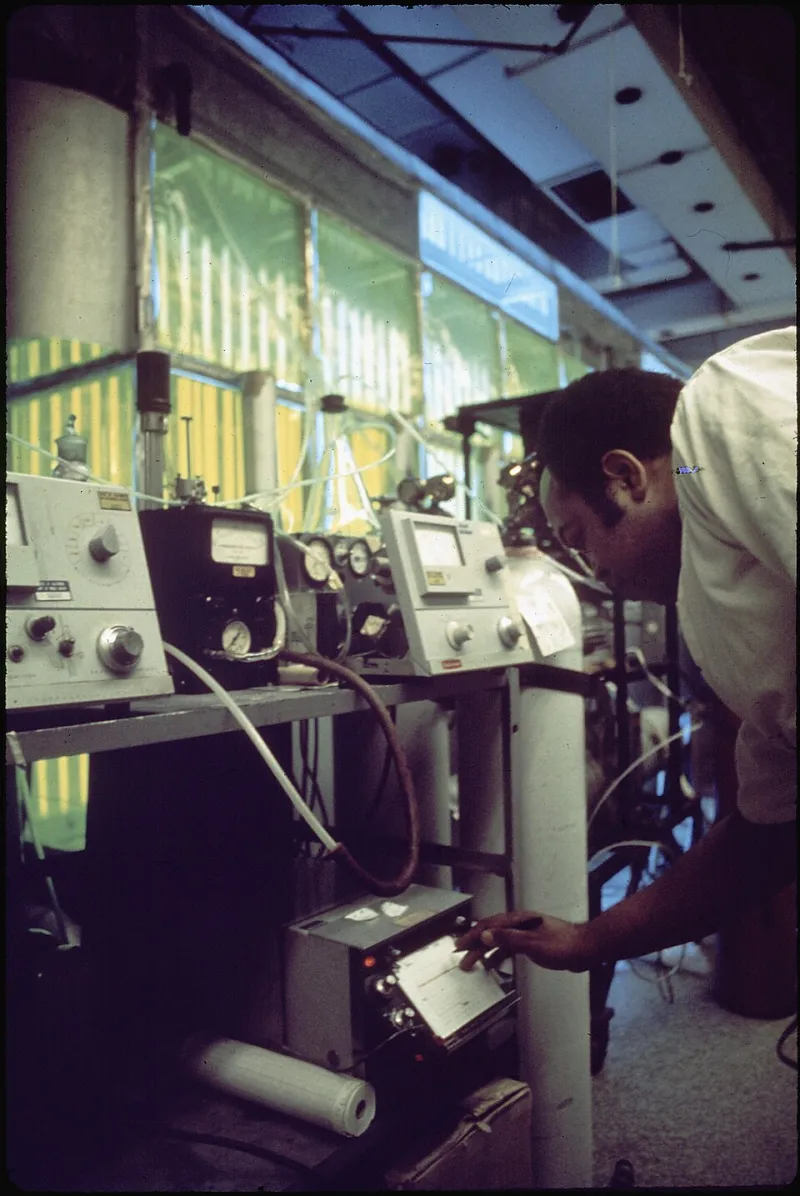
Photo: Ted.ns, CC BY 4.0, via Wikimedia Commons
Drive through central Iowa or the Red River Valley during planting season and you will pass more weather stations than any highway sign indicates. Mounted on fence posts, bolted to grain elevator catwalks, wired to pivot irrigation towers — soil moisture probes, canopy temperature sensors, and tipping-bucket rain gauges have been going up on American farms at a pace that no state or federal program has matched. Nobody coordinated this buildout. Nobody budgeted for it. It happened because co-ops and independent agronomists had a practical problem: frost timing, spray windows, and nitrogen decisions turn on microclimate details that official networks, spaced tens of kilometers apart, cannot see.
Resolution by Necessity
The National Weather Service cooperative observer program and the mesoscale networks operated by state climatologists provide indispensable backbone data. But a single station can stand in for an entire county, and in the Midwest, a county can contain half a dozen distinct growing environments — a low-lying frost pocket along a creek, a well-drained ridge, a field sheltered by a windbreak. A grower making a replant decision or a fungicide call needs the reading for their field, not their region's average.
Cooperatives solved this the way they solve most problems: collectively, and incrementally. A local co-op agronomy department buys a few stations, members host them in exchange for access to the data, and the network grows one section at a time. Independent crop consultants have done the same with cellular-connected soil probes. The result, in parts of Minnesota, Nebraska, and Illinois, is monitoring density that exceeds anything the public sector maintains — built not as a network at all, but as an accretion of individual business decisions.
What the Aggregate Reveals
Stitched together, these private grids are starting to function as a research instrument. Multi-year microclimate records are letting agronomists map how cold-air drainage interacts with tile drainage, how dew persistence varies across a township, and how growing-season length is shifting at a spatial scale climate models were never designed to resolve. Insurers and commodity analysts have taken notice; so have researchers who once had to interpolate between sparse stations and hope.
The data quality question is fair and usually the first one raised. Farm-adjacent stations can suffer from siting problems — too close to a grain bin, too shaded by a tree line. But the better co-op networks have adopted their own siting standards, run cross-station consistency checks, and increasingly calibrate against regional reference sites. The assumption that only agency-run instruments can be trusted is wearing thin.
The Case for Partnership Over Duplication
Here is where the argument turns uncomfortable for the public sector. Agencies facing budget pressure have periodically proposed expanding mesoscale networks to close exactly the gaps the co-ops have already closed. Duplicating coverage that private growers built and maintain at their own expense is hard to defend on fiscal grounds — and harder still when the alternative, a formal partnership, is sitting on the table.
What would that partnership look like? Modest things, mostly. Data-sharing agreements that pipe co-op station feeds into state climate office archives with appropriate quality flags. Cost-share programs that help members upgrade to research-grade sensors, in exchange for open data. Siting standards developed jointly rather than imposed. A few states have experimented along these lines; the practice is far from general.
There are legitimate cautions. Private networks exist to serve members, and data-sharing terms must respect that. Long-term continuity is not guaranteed if a co-op changes vendors or a hosting farmer retires. Public archives need provenance and stability that ad hoc arrangements cannot always promise.
But the alternative — agencies rebuilding from scratch what the countryside has already instrumented — serves no one. The Midwest's farmers, through their cooperatives, have quietly built a national asset. The reasonable question is not whether it belongs in the official record, but how quickly the official record can make room for it.