The Slow Lie: What Happens When a Monitoring Network Forgets to Check Itself

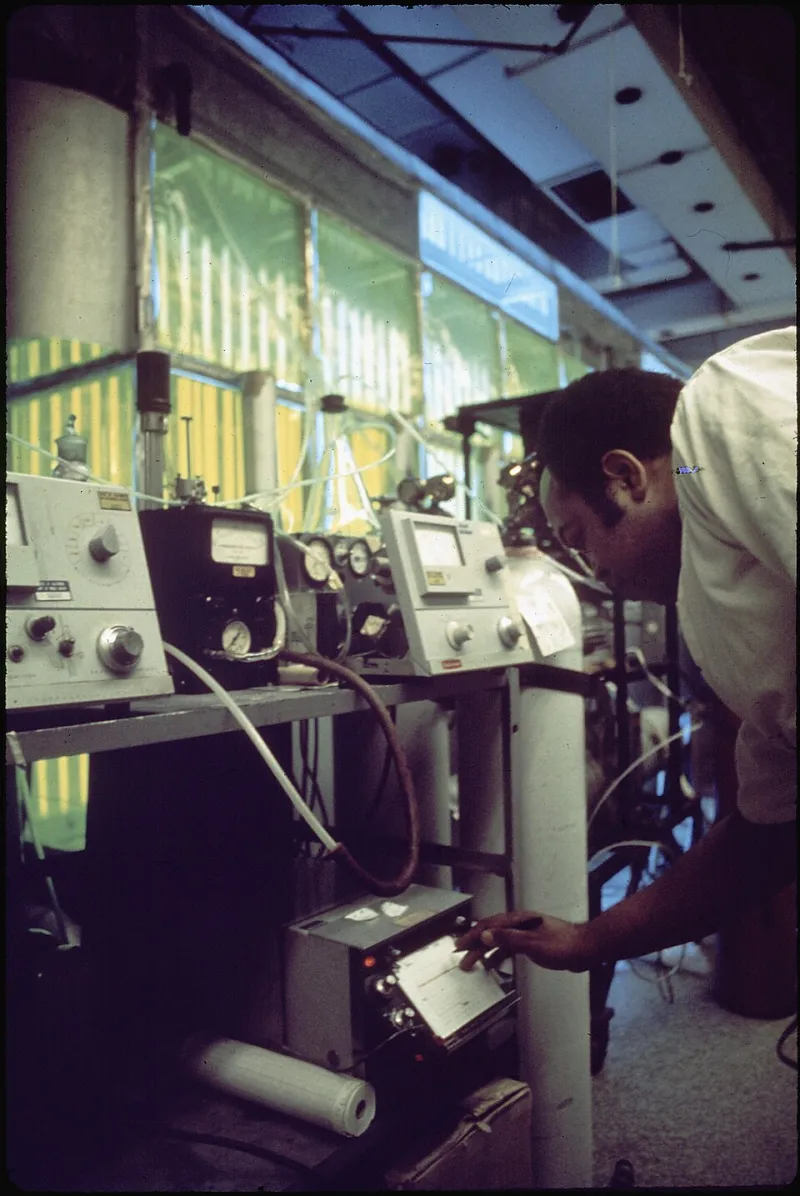
Photo: environmental sensor calibration laboratory technician instrument, via atek.io
There is a particular kind of failure that never triggers an alarm. The sensor keeps reporting. The dashboard keeps updating. The spreadsheet fills in on schedule, every hour, every day. Nothing looks wrong — because nothing is broken. The instrument has simply, quietly, begun to describe a world that no longer exists.
Calibration drift is the most underappreciated risk in environmental monitoring. Unlike a dead sensor, which announces itself with a gap in the record, drift produces data that is plausible, continuous, and wrong. And the longer it goes uncorrected, the more decisions get built on top of it.
The Anatomy of a Quiet Failure
Consider a hypothetical but representative case: a mid-sized wastewater facility in the Midwest running optical dissolved oxygen probes in its aeration basins. Over a hot summer, biofilm accumulates on the sensor caps. The readings drift downward by half a milligram per liter over four months — an amount invisible on any single day's trend line. The control system responds by over-aerating, energy costs climb, and the facility's quarterly discharge reporting carries a subtle bias that no one catches until an annual audit.
The financial damage is real but modest. The reputational damage of a corrected compliance report is harder to quantify. And the erosion of confidence in the network — once operators learn the data lied to them — can take years to rebuild.
Drift has many parents. Membrane fouling and biofouling in water probes. Electrolyte depletion in electrochemical gas cells. Solar radiation loading on temperature housings. Dust on optical windows. Even electronics age: reference voltages wander, and with them, every derived measurement.
Why Redundancy Beats Precision
The instinctive response is to buy better instruments. Sometimes that helps. More often, the better answer is architectural: design the network so that no single instrument is the sole witness to reality.
Colocating a secondary sensor — even a modest one — against a primary instrument creates a constant, low-cost sanity check. When two devices that should agree begin to diverge, that divergence is itself a data point, and usually an early warning. Regional reference stations operated by agencies like the EPA or USGS serve the same function at landscape scale: they anchor local networks to something traceable.
The principle generalizes. A single soil moisture probe in one field is a guess with decimals. Three probes at different depths and positions, cross-checked weekly, are a measurement.
A Practical Calibration Discipline
Organizations that maintain credible long-term records tend to share a few habits:
- Scheduled verification, not just scheduled calibration. A known reference — a saturated salt bath for humidity, a zero-air canister for gas sensors — checked on a fixed cadence catches drift before it compounds.
- Documented correction histories. Every adjustment, cleaning, and replacement logged with timestamps, so past data can be reinterpreted when a drift event is discovered.
- Seasonal awareness. Fouling accelerates in warm, biologically active water; electrochemical cells age faster in heat. Calibration intervals should reflect the season, not just the calendar.
- Statistical flagging. Sudden step changes, variance collapse, or readings pinned at range limits are classic drift signatures. Simple automated screens catch many failures that human reviewers miss.
None of this is glamorous. It is the unglamorous layer, though, that separates a monitoring program from a monitoring theater.
The Trust Dividend
There is a broader stake here. Environmental data increasingly informs zoning decisions, litigation, public health advisories, and corporate sustainability claims. When instruments drift and no one notices, the corruption propagates outward — into reports, models, and ultimately policy. When the drift is caught and corrected, the record becomes stronger, not weaker, because the uncertainty is known.
The best monitoring networks are not the ones with the most expensive sensors. They are the ones that distrust themselves productively — that check, cross-check, and correct as a matter of routine. In a field obsessed with resolution and sensitivity, the rarest capability is still the humblest one: knowing when your own instrument has stopped telling the truth.