Second Life Instruments: What Universities Throw Away and Who's Waiting to Catch It
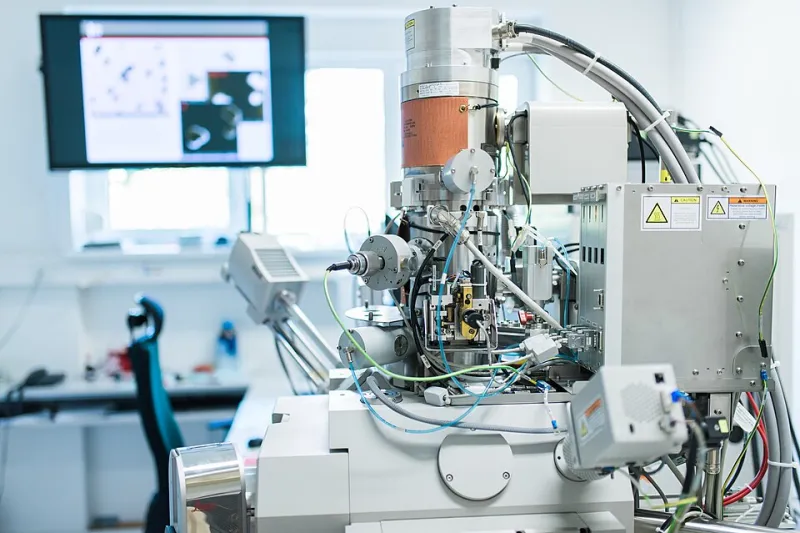
Photo: Akademie věd České republiky / Czech Academy of Science, CC BY-SA 3.0 cz, via Wikimedia Commons
Somewhere in a state university surplus warehouse right now, a pyranometer that once logged three years of solar irradiance on a Nebraska crop field sits on a metal shelf beside a pallet of obsolete office chairs. Its datasheet says it is good for a decade. Its institutional owner says it was replaced under a new grant. Both statements are true, and together they describe one of the quietest contradictions in American environmental science: instruments built for long service lives routinely exit active duty early, and almost nothing in the ecosystem is designed to catch them.
The secondary market for used environmental instruments is fragmented, informal, and surprisingly large. Understanding how it works—and where it fails—matters for anyone operating a monitoring program on a constrained budget.
How Working Sensors End Up on the Market
The retirement of an environmental sensor rarely signals the end of its functional life. Grant cycles end. Labs upgrade to newer platforms. A department consolidates stations and inherits redundancy. In each case, the instrument is decommissioned not because it failed but because the institution's priorities moved on.
What happens next depends heavily on the institution. Some universities run structured surplus programs that list equipment publicly or route it through state auction portals. Others simply box instruments and store them indefinitely. A significant share ends up with third-party resellers, and a smaller but growing portion appears on general online marketplaces with little documentation of service history.
The result is a gray market with no shared standard: the same model of data-logging sonic anemometer might be sold with a full calibration certificate by one vendor, and with nothing but a photograph by another.
What's Actually Worth Buying
The secondary market is not uniformly risky. Certain categories of instruments age gracefully and carry meaningful value for schools, small municipalities, and citizen science groups.
Mechanical and optical instruments with stable reference physics—tipping bucket rain gauges, thermistors, standard pyranometers—tend to hold their characteristics well if stored properly. Data loggers from established manufacturers are frequently excellent used purchases, since their performance depends more on electronics than on environmental wear. Spare parts, mounting hardware, and enclosures are almost always worth acquiring secondhand.
Where caution is warranted: anything with a consumable or degradable sensing element. Electrochemical gas sensors have finite lifespans. Humidity sensors drift with exposure to contaminants. Ultrasonic anemometers with unknown field history may carry unlogged trauma from hail, ice, or lightning proximity. And calibration is the great invisible variable—an instrument can be mechanically perfect and metrologically useless.
The Drift Problem Nobody Lists on eBay
Sensor drift is cumulative, often slow, and almost never visible to a buyer. A relative humidity probe that spent five years in an agricultural field may read three to five percent off specification, with no outward sign. For the original owner, that drift was tracked and corrected through scheduled recalibration. For a secondary buyer, it is simply inherited.
This is the structural weakness of the used instrument market: the buyer rarely knows what the sensor experienced. Storage conditions, exposure history, and calibration lineage are typically absent from listings. A few resellers have begun offering recalibration with documented certificates, and those vendors effectively define the trustworthy tier of the market. Everything below that tier is a gamble priced accordingly.
Why It Matters for Underfunded Programs
For well-resourced laboratories, the secondary market is a convenience. For everyone else, it can be the difference between having a monitoring program and not having one.
Community colleges building their first environmental science courses, watershed associations in rural states, tribal environmental departments stretching federal pass-through funding, and high school STEM programs all face the same arithmetic: new research-grade instruments cost more than many entire program budgets. A recalibrated used data logger at a fraction of list price can put real measurement capability into a classroom or a field site that would otherwise rely on modeled data alone.
There is also a sustainability argument. An instrument diverted from a landfill avoids embodied-carbon waste and extends the useful life of manufactured hardware—a small but real contribution in a field that increasingly audits its own footprint.
A Practical Checklist for Buyers
Programs considering used instruments should approach the purchase as a mini-audit:
- Demand service history. Ask for calibration certificates, deployment logs, or at minimum a written account of storage conditions.
- Budget for recalibration. Assume the instrument arrives out of spec and price a calibration lab into the total cost.
- Prefer vendors over individuals when the sensing element is consumable or degradable.
- Verify firmware and software compatibility with your existing data infrastructure before purchase, not after.
- Inspect mechanically for corrosion, insect intrusion, cable damage, and enclosure wear—field instruments die of housing failure as often as sensor failure.
Toward a More Honest Market
The deeper issue is institutional. Universities and agencies that decommission instruments rarely have incentives to document them, and buyers rarely have leverage to demand documentation. A modest fix—standardized disclosure of service history at surplus transfer—would meaningfully raise the floor of the secondary market without new regulation.
Until then, the market will remain what it is: a genuine lifeline with real hazards attached. The instruments in that surplus warehouse are not junk. They are working tools waiting for an owner who asks the right questions before plugging them in.