The Van That Comes to You: Inside America's Traveling Calibration Fleet
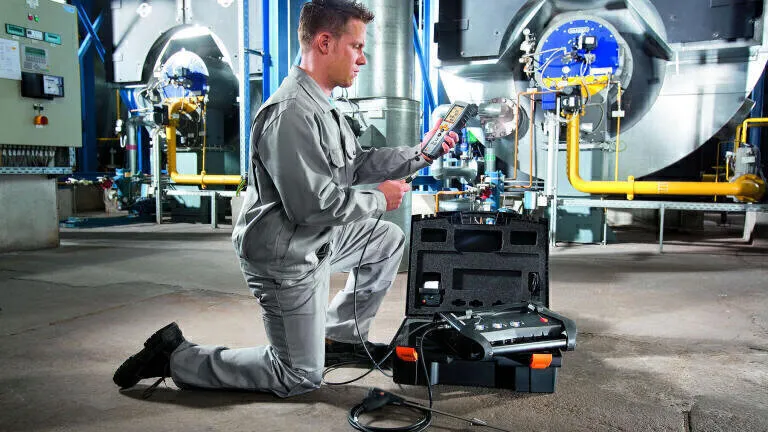
Photo: calibration van environmental monitoring equipment technician, via www.envirotech-online.com
For decades, the calibration ritual in environmental monitoring has followed a familiar script: pull the sensor, box it up, ship it to a factory or accredited lab, wait weeks, pay the invoice, reinstall, and hope the reinstalled unit behaves like the one you removed. For a small water district with twelve stations, or a university lab with sensors strung across a watershed, that script is expensive enough to skip. The result is the quiet credibility gap this publication has covered before — instruments that drift for years without anyone the wiser.
A different model is now rolling down American interstates: the mobile reference lab. Mounted in vans, box trucks, and purpose-built trailers, these traveling labs carry traceable reference instruments, gas standards, humidity generators, and radiation sources directly to the deployment. The question is no longer whether the concept works. It is whether the economics hold for the programs that need it most.
What's Actually in the Truck
A typical mobile calibration unit is a study in controlled environment on wheels. Operators describe interiors held within a degree or two of a setpoint, saturated salt chambers and two-pressure humidity generators for RH verification, NIST-traceable gas cylinders for CO2, methane, and ozone cross-checks, and co-located reference stations that can park beside a fixed site for 24 to 72 hours of side-by-side comparison.
The service tiers matter as much as the hardware. A quick spot-check might take an hour per sensor. A full co-location audit — where the mobile reference sits beside the permanent station long enough to capture a diurnal cycle — is the gold standard, catching response-time faults and microclimate artifacts that a bench check never reveals.
The Operators Behind the Wheel
The fleet is a mix of three breeds. National calibration firms have extended their lab services onto highways, treating mobile work as a premium tier for customers with too many fixed assets to ship. Regional instrumentation distributors run vans as a customer-retention play across agricultural belts in the Corn Belt and Central Valley. And a handful of university shared-facility programs now operate trailer-mounted references, booking time to member institutions the way a library books out equipment.
One operator in the Mountain West described the work as "preventive medicine for datasets." Her clients, she says, are less interested in certificates than in the conversation: watching a technician discover that a rain gauge was undercatching by nine percent because of a clogged orifice beats reading about it in an annual report.
Running the Numbers
Factory recalibration for a mid-grade air quality sensor typically runs a few hundred dollars per unit, plus two-way shipping and the downtime of an unmonitored site. A mobile visit spreads a mobilization fee — often $1,500 to $3,000 depending on distance — across every sensor on the route. For a network of thirty or more stations clustered within a day's drive, the per-unit math favors the van. For a five-station program, it usually doesn't, unless the operator pools a route with neighboring organizations.
There is also the hidden ledger: shipping damage, insurance, and the data gap itself. A station dark for three weeks during factory turnaround is three weeks of missing observations that no certificate can restore. Co-location audits, by contrast, can be scheduled to overlap with normal operation, producing a continuous record plus a documented comparison.
Does It End the Drift Problem?
Cautiously, yes — for the programs that can afford the cadence. Annual or semiannual mobile audits catch the slow, nonlinear drift that annual bench checks miss, and they build a longitudinal record of each sensor's behavior that factory service cannot. The trust dividend is real: funders and regulators increasingly respond better to a co-location report than to a stack of calibration certificates.
The limits are honest ones. Mobile labs cannot perform the deep, chamber-level characterization a metrology lab can, and scheduling depends on route density — programs in rural interiors may wait months for a van to pass nearby. And a calibration visit is a snapshot; between visits, the same drift mechanisms apply.
What Buyers Should Ask
For procurement teams weighing the mobile option, three questions separate serious operators from well-painted vans: What are the traceability chains for every reference on board? Will the operator provide co-location data, not just pass/fail stickers? And can they commit to a recurring route, so your program's history is audited by the same references year over year?
The traveling calibration fleet will not replace the factory floor. But for the growing population of small, distributed monitoring networks — the ones most vulnerable to silent drift — it may be the first service model built around how they actually operate: fixed assets, thin budgets, and data that has to be defensible in public.