Two Thermometers, One Planet: The Quiet Cost of Measuring America in Fahrenheit
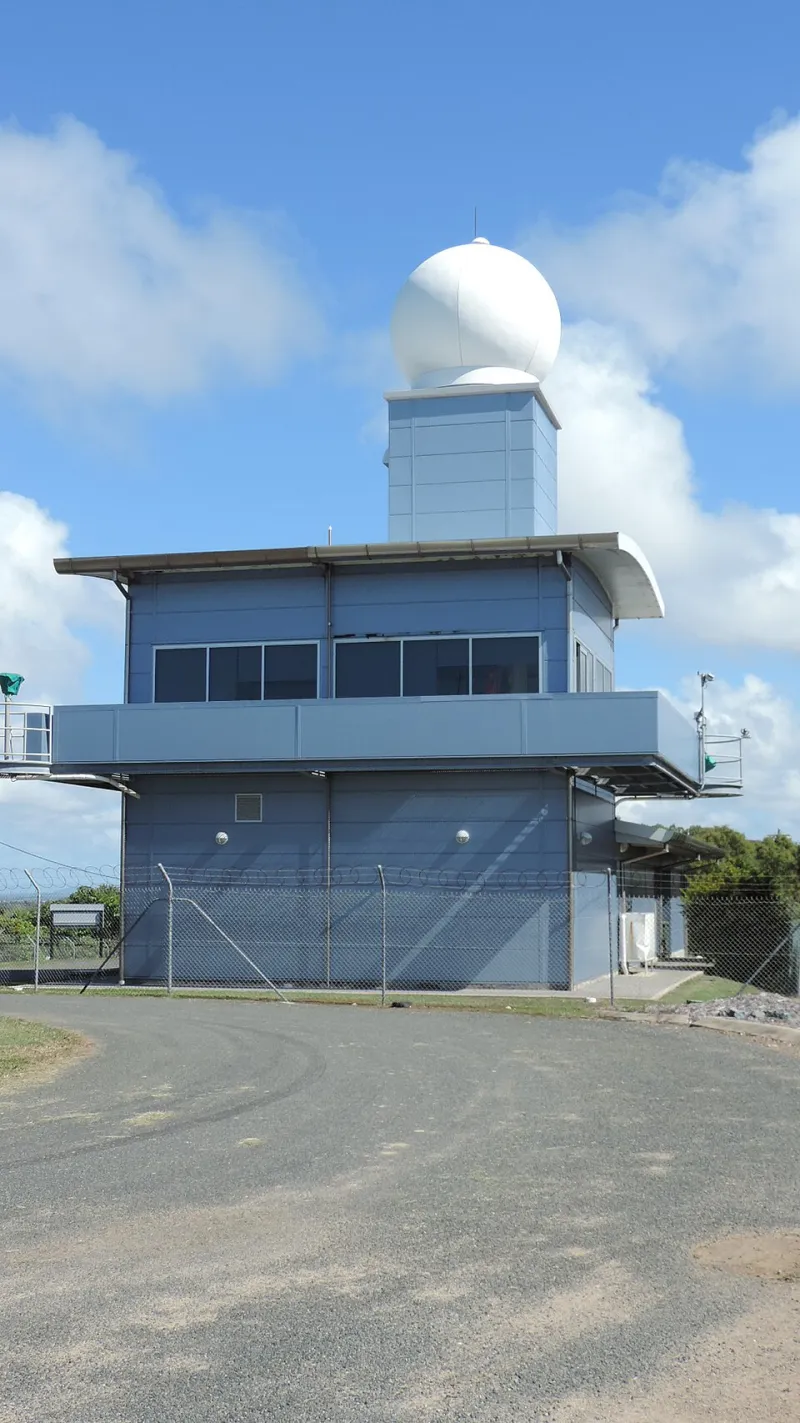
Photo: Kerry Raymond, CC BY 4.0, via Wikimedia Commons
Every environmental sensor sold in the United States carries a quiet contradiction inside its firmware. The thermistor, the thermocouple, the RTD — nearly all of them measure temperature as a physical property that maps most naturally onto the Celsius scale and the Kelvin-derived mathematics of calibration. And yet, for a large share of American customers, the display must read Fahrenheit. The sensing is metric. The reporting is not. Between those two facts sits a layer of software, and that layer is where things go wrong.
The Conversion Layer Nobody Audits
Ask an instrument engineer about unit handling and you will usually get a shrug. The conversion from Celsius to Fahrenheit is arithmetic a middle schooler can do: multiply by nine-fifths, add thirty-two. The formula is not the problem. The problem is that conversions live in dozens of places — sensor firmware, logger configuration, gateway software, cloud pipelines, spreadsheets, and finally the analyst's laptop — and nobody owns the whole chain.
The classic failure modes are well documented in the annals of engineering embarrassment. A temperature logged as 72.0 might be interpreted downstream as Celsius, quietly becoming a scalding 161.6°F in a modeled dataset. Offsets get applied twice, or not at all, when a station is reconfigured after a firmware update. Unit metadata, where it exists at all, is frequently stripped when data is exported to CSV, leaving a bare column of numbers with no memory of what they meant.
For research teams pulling from mixed sources — a federal network reporting in Celsius, a state agency in Fahrenheit, an agricultural co-op in whatever the vendor shipped — reconciliation becomes a recurring tax on every analysis. It is rarely catastrophic. It is always present.
What the Rest of the World Deleted
Metrication efforts in the United States have a long, well-worn history of stalling, and environmental monitoring inherited the aftermath. The 1975 Metric Conversion Act made the metric system the preferred system of measurement and then declined to require anyone to use it. The result, visible across American industry, is a hybrid: science in SI units, commerce and regulation in customary units, and a permanent translation industry in between.
Environmental sensing sits squarely on the fault line. Air quality standards are written in micrograms per cubic meter, but public-facing heat advisories are issued in Fahrenheit. Hydrology works in cubic feet per second while the scientific literature reports in cubic meters. Wind speed arrives in miles per hour for the public and meters per second for the model. Every one of those pairs represents a conversion that must be specified, implemented, tested, and remembered.
Vendors have adapted, but adaptation is not the same as simplicity. Many US-market instruments ship with a configuration flag for display units, and the better ones store raw data in SI and convert at presentation. The cheaper ones convert at acquisition — baking Fahrenheit into the stored record — which is where long-term trouble begins. A dataset recorded in Fahrenheit cannot be merged cleanly with one recorded in Celsius without knowing the provenance of every column, and provenance is exactly the thing that erodes fastest.
The Hidden Tax, Itemized
It is tempting to dismiss unit friction as a rounding error in the grand scheme of environmental work. The more honest accounting suggests otherwise, because the costs are structural rather than dramatic.
There is the engineering cost: dual-scale firmware means two code paths, two sets of rounding behavior, and twice the surface area for bugs. There is the procurement cost: instruments specified in mixed units complicate comparison shopping, since a sensor rated to 0.1°C precision does not translate neatly into the tenth-of-a-degree Fahrenheit resolution buyers think they are comparing. There is the training cost: technicians fluent in one scale make transcription errors in the other, particularly under field pressure.
And there is the scientific cost, which is the hardest to quantify and the most corrosive. Meta-analyses that pull together American monitoring data with international datasets must trace and normalize units across sources. Errors at this stage do not announce themselves. A systematic bias introduced by a mishandled conversion propagates quietly through trend analysis, and the resulting conclusions inherit a flaw no reviewer can see from the summary statistics alone.
Where the Market Is Moving Anyway
The irony of the situation is that market forces are doing what legislation did not. Most modern sensing platforms — particularly those built for integration with research infrastructure or international customers — now store and transmit in SI units by default, treating Fahrenheit as a display preference rather than a data format. Cloud dashboards made conversion a cosmetic choice: the underlying number is Celsius, the label is whatever the user's locale demands.
That architecture, converting only at the point of presentation, is the correct one, and it is worth stating plainly as a procurement criterion. Buyers should ask vendors three questions: In what units is data stored at rest? Is unit metadata embedded in the export format? Can a converted value be traced back to the raw measurement? Vendors with good answers have thought about the problem. Vendors without them are asking their customers to do that thinking later, under deadline, without documentation.
The Fahrenheit effect will not disappear. Americans will read their thermostats, their forecasts, and their air quality alerts in customary units for the foreseeable future, and there is nothing wrong with that at the point of human comprehension. The goal is narrower and more achievable: keep the customary units where people are, and keep the data underneath in a system the rest of the planet shares. Every layer of translation that can be removed from the pipeline is a layer that cannot silently corrupt a reading at three in the morning, when nobody is watching the dashboard and the numbers are the only witness.