Follow the Money, Then Follow the Moisture: Who Really Pays for America's Soil Data
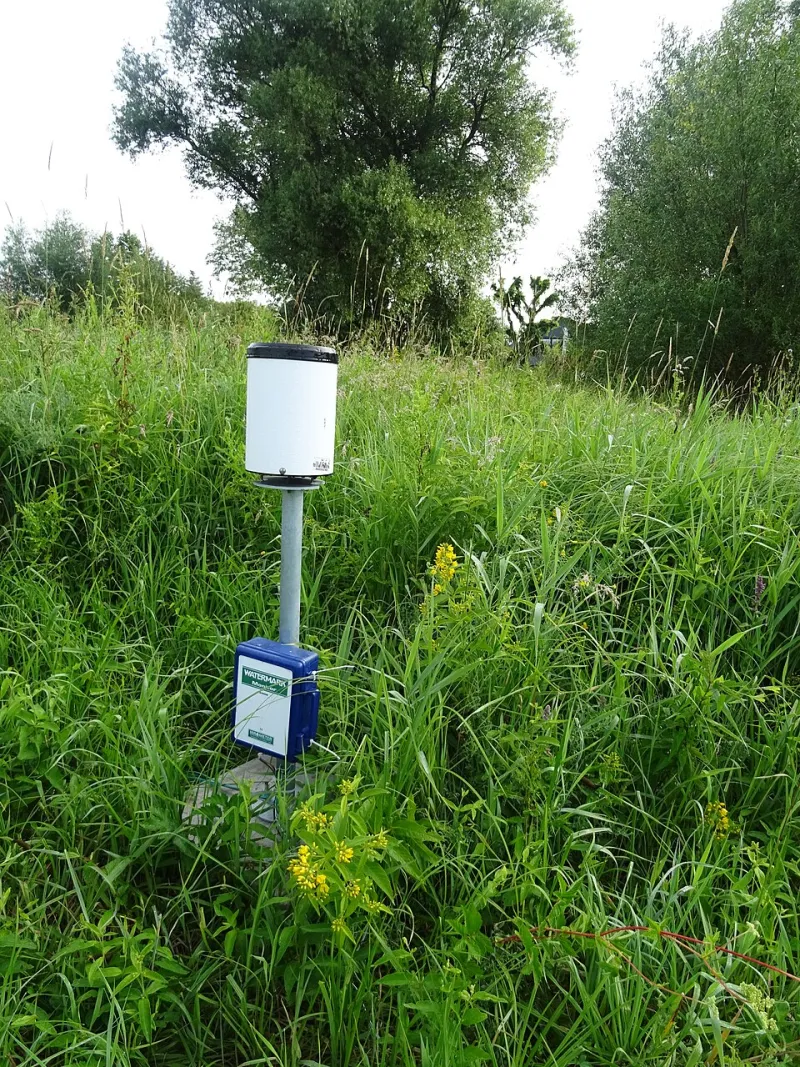
Photo: Karbohut, CC BY-SA 4.0, via Wikimedia Commons
Every environmental dataset used in an American research paper has a payer. Rarely is it the institution whose name appears on the publication. More often, it is a line item buried in a USDA conservation program, an EPA community monitoring cooperative agreement, or a NOAA regional observing grant — each with its own renewal calendar, its own reporting burden, and its own quiet capacity to vanish.
For the researchers and facility operators who read EnvSens, this is not an abstraction. It is the difference between a soil moisture record that spans twenty years and one that ends, without explanation, in October.
The Patchwork Nobody Designed
The United States does not fund environmental monitoring as a system. It funds it as a collection of programs, each justified by a different mission. The USDA's Natural Resources Conservation Service supports soil climate networks because soil data serves agriculture. NOAA's regional programs fund coastal and atmospheric observations because weather prediction depends on them. EPA grants flow toward air and water monitoring, usually with a community-health framing attached.
A single monitoring site in the interior West may draw on two or three of these streams at once — a federal base grant, a state cost-share, and a university's indirect contribution. Each stream has a term of two to five years. None of them is guaranteed to renew in the same configuration.
The result is a national data infrastructure that is, in effect, on a rolling two-year lease with itself.
One County, One Grant Cycle
Consider a representative case — a composite drawn from several real networks we have followed. A rural county in the northern Great Plains operates eleven soil moisture probes at depths from 10 to 100 centimeters, clustered around dryland wheat fields. The stations cost roughly $8,000 apiece to install, with annual maintenance running near $900 per site.
The money that keeps them alive arrives through a three-year grant, originally written to support drought early warning. Year one is spent on procurement and installation. Year two is the only year of genuinely stable operations. By year three, the program officer is already signaling that the priority has shifted toward urban heat mapping, and the county's soil network must compete for a shrinking slice of a renewal that may not come.
In year four, the maintenance budget drops to zero. The sensors keep transmitting — that is what they are built to do — but nobody calibrates them, and nobody notices when a rodent chews through a data logger cable in August. The record continues, technically. Its reliability does not.
What Lapse Actually Looks Like
Funding failure is rarely a clean shutdown. It is degradation. Data gaps appear where technicians used to visit quarterly. Calibration drifts accumulate uncorrected. Metadata — the site photographs, the sensor serial numbers, the maintenance logs — ends up on a departed graduate student's laptop.
This matters far beyond the county line. Soil moisture records feed drought indices, wildfire risk models, and satellite validation campaigns. A station that goes dark in one county leaves a hole in products used across the region. The cost of a $900 annual maintenance visit was never the issue. The issue was that nobody's budget line was structured to pay it after year three.
Why Researchers Should Read the Grant, Not Just the Metadata
The practical lesson for anyone consuming or producing environmental data: before you trust a long-term record, ask what funded it and when that funding expires. A dataset with a grant cycle ending next year is a different kind of asset than one with institutional base support.
For teams planning their own deployments, three habits help. First, budget end-of-life explicitly — decommissioning, data archiving, and metadata handoff should be line items, not afterthoughts. Second, diversify funding so no single program's priorities can end a record. Third, build redundancy into the human layer: if one person holds all the site knowledge, the network is one resignation away from failure.
Instruments are durable. The institutions around them are not. The best sensing networks are designed accordingly.