Ghost in the Gauge: The Orphaned Instruments Still Logging Data for Companies That No Longer Exist
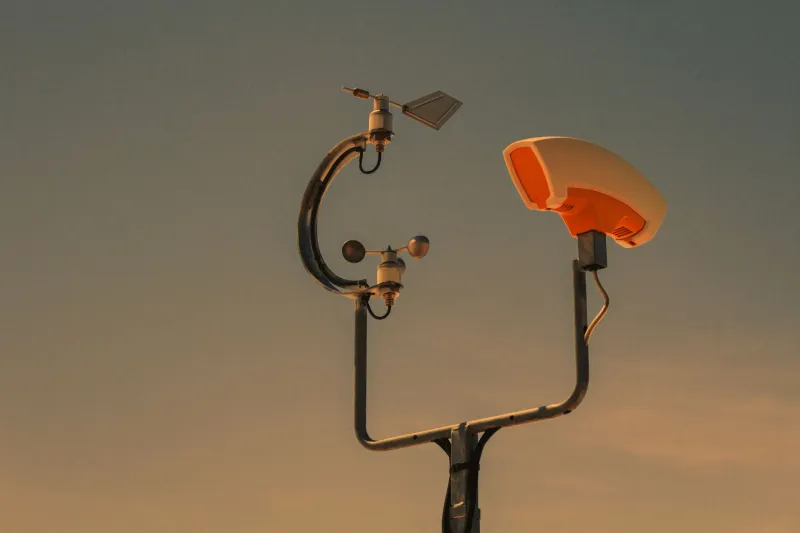
Somewhere in a groundwater well outside Reno, a data logger manufactured by a company that dissolved in 2016 is still recording water levels every fifteen minutes. Nobody at the utility can update its firmware. Nobody can order a replacement board. Yet the unit keeps writing to its flash memory, faithful and unattended, waiting for a technician with the right cable and the right software to retrieve what it has learned.
These are the orphaned instruments of American environmental monitoring—hardware outliving its makers, its documentation, and sometimes its own support contracts. As consolidation accelerates across the sensing industry, the problem is growing more common and more expensive.
When the Support Line Goes Silent
The sensing industry is not kind to small manufacturers. Acquisitions roll boutique instrument makers into conglomerates; venture-backed startups fold when their growth projections miss; family-owned firms simply retire without a succession plan. Each closure strands a fleet of deployed equipment.
The consequences arrive in stages. First, spare parts dry up. Then firmware updates stop, leaving vulnerabilities unpatched. Eventually, the proprietary software needed to configure or interrogate the device stops running on modern operating systems. A monitoring network built around that hardware doesn't fail all at once—it decays, quietly, one unsupported component at a time.
For utilities and research stations with networks designed to operate for twenty or thirty years, this is not a hypothetical. It is a maintenance line item that never appeared in the budget.
The Secondary Market for Dead Firmware
Necessity has produced a market. On secondary auction sites and specialty resellers, legacy configuration cables and licensed software dongles for discontinued loggers routinely sell for multiples of their original price. A fifteen-year-old optical interface for a defunct brand of sonde can command several hundred dollars, because a handful of agencies still have hundreds of those sondes in the field.
Archived installation discs circulate with the reverence of rare books. Some firms now specialize in legacy instrument support—buying old inventory, maintaining virtual machines with period-correct software, and offering retrieval services for data trapped in obsolete formats. What began as scavenging has hardened into a genuine service industry.
Reverse Engineers at the Forum
When the market fails, the community steps in. Online forums and code repositories host a small but determined corps of technicians reverse-engineering discontinued serial protocols, documenting pinouts that never made it into manuals, and writing open-source tools to talk to hardware whose source code is lost.
One contributor famously reconstructed a proprietary telemetry format by capturing traffic from a working unit and brute-forcing the framing bytes over a winter of weekends. His decoder is now used by at least a dozen water districts. These efforts are unpaid, undocumented by any manufacturer, and increasingly essential to the continuity of American environmental records.
Questions to Ask Before a Twenty-Year Deployment
Procurement language rarely accounts for corporate mortality. Buyers evaluating long-life sensor networks should press vendors on questions the spec sheet ignores:
- Data format ownership. Is the output format fully documented, or proprietary? Can third-party tools read it today?
- Firmware escrow. Does the manufacturer commit to releasing source code or at least protocol documentation if it ceases operations?
- Standard interfaces. SDI-12, Modbus, and open telemetry standards dramatically improve a device's odds of surviving its maker.
- Corporate history. A vendor on its third acquisition in five years warrants a different risk assessment than a thirty-year employee-owned firm.
- Exit plan. Ask directly: what happens to our fleet if you close the doors?
Designing for the Manufacturer's Funeral
The healthiest networks assume their vendors will not always be there. That means preferring documented protocols over proprietary ones, archiving configuration files and software alongside the instruments themselves, and budgeting for protocol translation rather than assuming seamless upgrades.
The instrument outside Reno will eventually be retired, its data pulled by a technician using software someone in a forum rebuilt from scratch. It will have outlived its maker by nearly a decade. That is either a testament to good engineering or an indictment of procurement practice. In truth, it is both—and the next generation of monitoring networks will be judged by whether they learned the lesson.