Zip Ties and Raspberry Pi: The Amateur Network Filling America's Monitoring Gaps
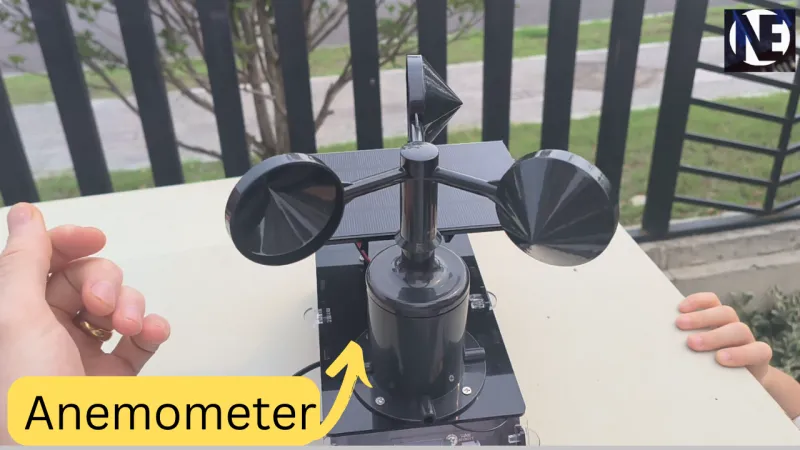
Photo: homemade weather station anemometer mounted on rural barn roof, via content.instructables.com
The Station Nobody Budgeted For
Roughly twenty miles outside Wichita, a cup anemometer spins above a wheat field, mounted to a section of PVC pipe and secured, in the owner's words, "with the good zip ties." It is not a station anyone at the National Weather Service commissioned. It was assembled by a retired county surveyor for under $300, and its readings now flow automatically to a national volunteer observation network — where, on more than one occasion, they have been the only ground truth available during a severe thunderstorm.
Scenes like this are multiplying. As commercial sensor costs fall and open-source platforms mature, improvised environmental stations have become the de facto backup layer for a federal monitoring grid that was never dense enough to begin with.
Where the Official Grid Thins Out
The National Weather Service's ASOS network is built around airports, and the USCRN climate reference network is exemplary but sparse. Between those poles lies an enormous expanse of rural America where the nearest official observation may be an hour's drive away. Microclimates — a frost pocket in a valley, a hail corridor along a ridge — simply go unmeasured.
Into that void step the amateurs. Volunteer precipitation networks have logged daily readings for decades. The newer wave is different: low-cost particulate monitors on Vermont porches, soil moisture probes buried in Kansas fields, and temperature loggers wired to solar chargers and a Raspberry Pi, all reporting continuously to public dashboards.
From Garage to Citation
What was once dismissed as hobbyist noise is increasingly treated as data. Air quality researchers now routinely assimilate readings from consumer-grade particle sensors, applying correction algorithms to account for their biases. Hydrologists have pulled volunteer rain gauge reports into post-storm analyses. In several western states, amateur station observations have been referenced in wildfire weather retrospectives.
The appeal is obvious to anyone who has written a grant proposal. A research-grade station can cost five figures; a credible DIY build costs a few hundred dollars and an afternoon. For studies that need spatial density rather than laboratory precision, a thousand imperfect sensors can outperform fifty perfect ones.
The Integrity Question
Still, the phrase "cited by researchers" deserves scrutiny. Improvised stations vary enormously in siting, calibration, and upkeep. A gauge under a swaying oak reads low. An anemometer mounted too close to a roofline reads wrong in ways that are difficult to correct after the fact. Unlike federal stations, nobody audits the amateur network — there is no calibration fleet making rounds, no drift schedule, no maintenance log.
The most responsible projects acknowledge this openly. The better volunteer networks require standardized enclosures and placement guidelines, and some research groups publish their correction methods alongside the data. The worst simply upload, uncalibrated and unlabeled, into the same dashboards as everything else.
A Backup Layer Worth Formalizing
The lesson for the sensing industry is not that garage-built instruments should replace professional infrastructure. It is that the professional infrastructure has gaps, and those gaps are being filled whether anyone plans for it or not.
There is a middle path. Metadata standards for low-cost stations, optional calibration services for hobbyist hardware, and clearer labeling of data provenance would let researchers use amateur observations with appropriate confidence. A few manufacturers have already begun designing for this market — ruggedized versions of hobbyist sensors, firmware that timestamps and self-reports its own health.
The surveyor outside Wichita has no interest in a grant or a publication. He checks his station because the wheat matters to him and the nearest official gauge is a long drive away. But his data travels further than he does. The national monitoring picture is already a hybrid of the certified and the improvised; the work now is making sure the improvised half is honest about what it is.