The Sentinels Already in the Water: What Utilities Are Learning From the Instruments Inside Their Own Intakes
Every municipal water treatment plant begins with the same unglamorous asset: a raw-water intake, reaching out into a lake, reservoir, or river. For most of the last century, that pipe was a passive straw. Today, at a growing number of utilities across the Great Lakes region and the Mississippi basin, it has become something else entirely — a fixed observation platform, instrumented with multiparameter sondes that log temperature, pH, conductivity, turbidity, chlorophyll fluorescence, and dissolved organic matter every few minutes, around the clock.
The result is an accidental monitoring network of remarkable density. No research program could afford to deploy hundreds of continuous stations along the Lake Erie shoreline or the Iowa stretch of the Cedar River. The utilities did it because the stations came free with the plumbing.
Why the Intake Is the Perfect Sensor Platform
Instrumenting an intake solves several problems that have plagued surface-water monitoring for decades. The platform is stable, powered, and accessible in winter. Data can be transmitted over utility SCADA lines rather than expensive cellular links. And, critically, the measurement point sits exactly where it matters: the water a community will actually drink.
Modern sondes bundle optical and electrochemical sensors into a single cylindrical package. A chlorophyll-a fluorescence channel flags the leading edge of an algal bloom days before it becomes visible. A blue-green algae (phycocyanin) channel narrows the diagnosis to cyanobacteria — the group responsible for microcystin toxins. Turbidity and dissolved oxygen round out a picture that, twenty years ago, required a technician in a boat collecting grab samples once a week.
The operational payoff has been most visible in the Great Lakes, where harmful algal blooms have become an annual certainty rather than a rare emergency. Utilities drawing from Lake Erie and its tributary reservoirs now use intake sonde trends to make pre-emptive treatment decisions: adjusting powdered activated carbon dosing, shifting intakes between depth layers, or tightening filtration before a bloom arrives at the plant door rather than after.
Taste, Odor, and the Early Warning Economy
Not every water-quality event makes headlines, but every one makes phone calls. Taste-and-odor episodes — most often caused by the metabolites geosmin and 2-MIB produced by algae and actinobacteria — are among the most common customer complaints utilities face, and among the hardest to predict.
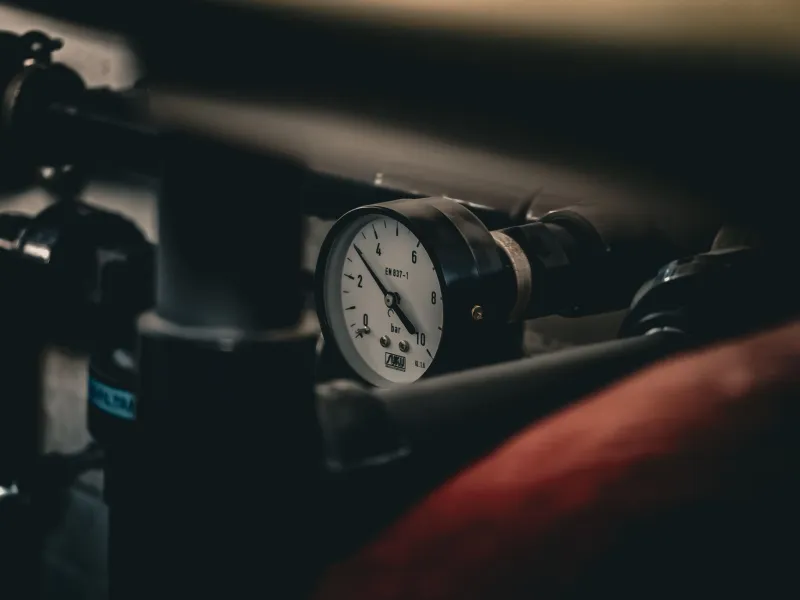
Intake instrumentation has changed that calculus. Fluorescent dissolved organic matter (fDOM) and algal pigment signals frequently rise days or weeks ahead of a geosmin event, giving plant operators time to adjust treatment chemistry. Several utilities in the Mississippi basin now treat their sonde trendlines the way a refinery treats pressure gauges: as leading indicators, watched daily, with response thresholds written into standard operating procedures.
The same data streams are quietly building a nutrient picture that regulators would struggle to assemble. Nitrate sensors on drinking-water intakes in agricultural watersheds record the pulse of fertilizer export after spring application and heavy rain, at a temporal resolution no sampling program matches. In effect, the utility is running a watershed-scale nitrogen experiment every year, whether anyone asks it to or not.
The Data That Stops at the Plant Fence
Here is the paradox: some of the most valuable continuous water-quality data in the country is effectively invisible outside the utilities that collect it.
Very few intake networks publish to public dashboards. Fewer still archive in formats researchers can use. The reasons are understandable — liability concerns, skepticism about sensor accuracy without rigorous independent validation, IT constraints, and the simple fact that no regulatory framework requires or rewards publication. A sonde deployed for treatment decisions is operational equipment, not a research instrument, and it is managed accordingly.
The loss is real on both sides. Researchers modeling nutrient loading or bloom dynamics lack ground-truth data at exactly the locations where water quality matters most. Meanwhile, utilities miss opportunities for peer validation, benchmarking against neighboring plants, and early warning from upstream operators whose intakes sit on the same water body.
Some bridges are beginning to form. Regional water providers in the Great Lakes have experimented with data-sharing compacts among member utilities. University partnerships — particularly in Ohio, Minnesota, and Wisconsin — have paired intake sondes with co-located research instruments, providing the validation data that could eventually make shared records trustworthy. The USGS has explored incorporating utility-collected data into national water-quality databases where quality assurance documentation exists.
What It Would Take to Unlock the Archive
The barriers are less technological than institutional. Modern sondes output standard data formats and can push to cloud endpoints as easily as to a plant HMI. The missing pieces are governance and incentive: a clear liability framework, standardized QA/QC documentation, and some professional or regulatory recognition for utilities that contribute data to the public record.
The precedent exists in other sectors. Electric utilities turned smart-meter telemetry into grid observatories; air agencies folded low-cost sensor networks into regulatory smoke advisories. Water could follow the same path — a sector that quietly built a national monitoring backbone out of the pipes it already owns, one sonde at a time.
The instruments are in the water. The question is whether the data will be allowed to surface with them.