Vocabulary at $900 a Unit: How 'Lab-Grade' Became the Most Profitable Phrase in Environmental Sensing
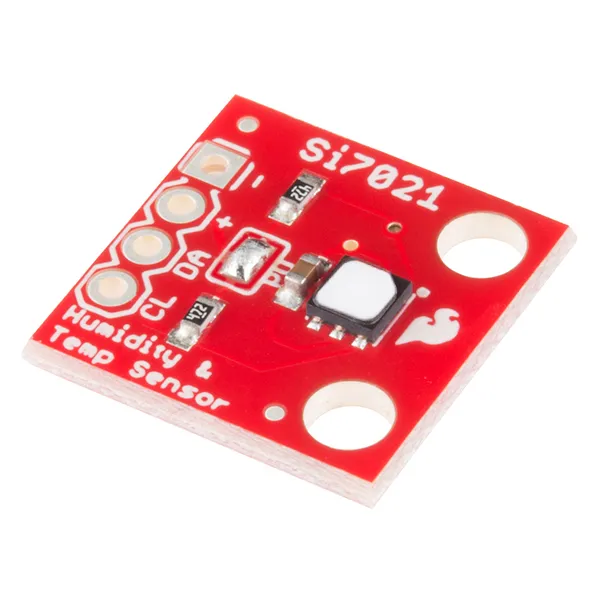
Photo: SparkFun, CC BY 2.5, via Wikimedia Commons
There is a moment in every environmental sensing purchase where the engineering stops and the language begins. It usually happens on a product page, somewhere between the accuracy spec and the operating range, when a vendor reaches for a phrase like lab-grade, industrial-precision, or meteorological standard. These terms appear technical. They are not specifications. They are adjectives — and in the American sensing market, adjectives carry a price premium that would make a licensed PE blush.
The Anatomy of an Unregulated Phrase
Start with the obvious question: who certifies a sensor as "lab-grade"? The answer, in the United States, is nobody. NIST provides traceability standards. ASTM and ISO publish reference methods. But no federal body polices the vocabulary of sensor marketing. A manufacturer can describe a $900 temperature and RH probe as "laboratory-grade" even if its long-term drift profile would embarrass a benchtop instrument three times its price.
The result is a linguistic gray zone that procurement officers navigate daily, often without realizing it. "We see 'lab-grade' on quotes for sensors that share housings with units sold to hobbyists," one university procurement specialist told us, requesting anonymity because her institution works with several major vendors. "The datasheet is technically accurate. The word next to it is doing all the work."
Where the Language Ends and the Engineering Begins
To be fair to manufacturers, the gap between marketing vocabulary and genuine capability is not always cynical. Mid-tier sensors have improved dramatically over the past decade. A capacitive RH element that costs $60 wholesale today outperforms research instruments from the early 2000s. The problem is not that these sensors are bad. It is that the vocabulary implies a tier of performance — stability, traceability, calibration cadence — that many mid-tier products were never designed to deliver.
An engineer at a Midwestern instrumentation firm, speaking generally about industry practice, put it bluntly: "The word 'grade' suggests a classification system. There isn't one. What matters is drift over time, hysteresis, response under real airflow — none of which fits on a headline."
What does fit on a headline is "meteorological standard," a phrase that borrows credibility from ASOS-era infrastructure and applies it to hardware with no connection to it. The National Weather Service's sensor specifications are public, rigorous, and expensive to meet. That is precisely why borrowing the vocabulary is so effective.
The Procurement Blind Spot
The machinery works because of how American institutions buy. A state environmental agency issuing an RFP may specify "laboratory-grade accuracy" without defining it. Vendors respond with products that use the phrase verbatim. The purchase order gets signed. Nobody has lied, and nobody has verified anything.
The cost of this ambiguity compounds. A monitoring network built on overstated expectations doesn't fail loudly — it fails quietly, through drift that goes uncorrected and datasets that become quietly unusable. We have written before about the maintenance crisis in environmental sensing; inflated tier language is its upstream supplier.
What Buyers Can Actually Do
The fix is unglamorous: buy specifications, not adjectives. Ask vendors for long-term drift data under stated conditions, not just initial accuracy. Request calibration interval recommendations in writing. Ask which reference standard the sensor's calibration is traceable to, and whether the traceability documentation is transferable. A vendor confident in its engineering will answer these questions readily. One that has been selling vocabulary will not.
There is also a case for institutional buyers to write better language into their own RFPs — defining "research-grade" by measurable criteria such as annual drift bounds and recalibration requirements rather than leaving the adjective to do the classifying.
The environmental sensing market does not need fewer good sensors. It needs fewer good words standing in for them. Until the vocabulary is disciplined by the people writing the purchase orders, the phrase "lab-grade" will keep doing exactly what it was designed to do: sell a mid-tier product at a research-grade price, one confident adjective at a time.